

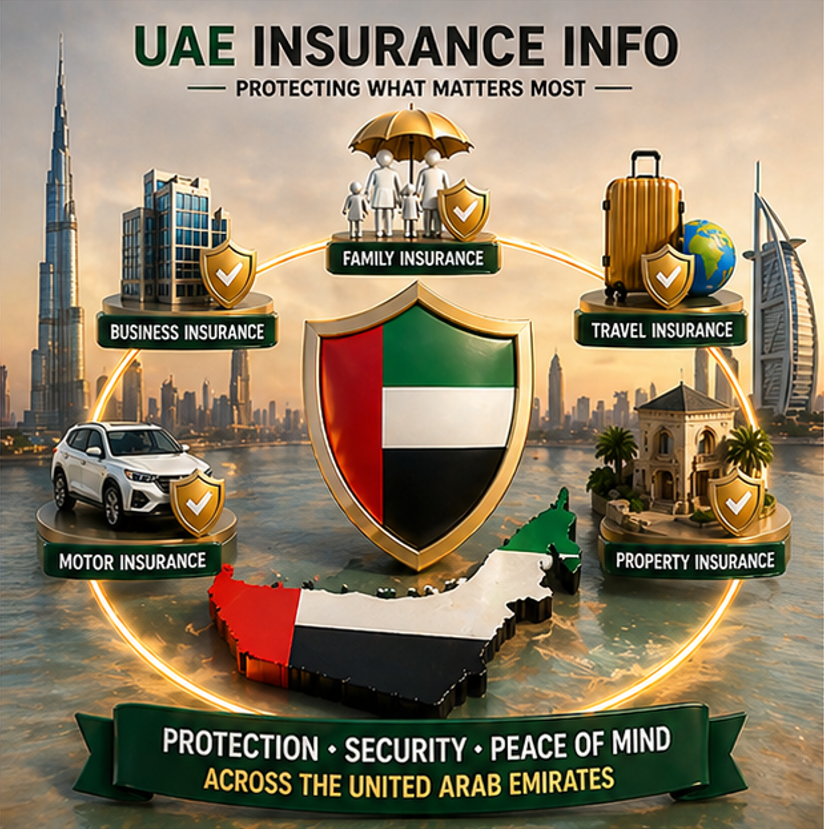
Insurance in the United Arab Emirates Complete Guide to Health Life Motor Travel and Property Coverage
Insurance in the United Arab Emirates is a highly regulated and mandatory-driven system where most coverage is linked to residency, employment, or legal requirements. Unlike many countries, insurance in the UAE is heavily compliance based, especially for health and motor coverage.
The system is shaped by expat population needs, employer sponsorship structures, and strict regulatory enforcement across Emirates like Dubai and Abu Dhabi.
How Insurance Works in the UAE
Insurance in the UAE is structured around three major pillars:
Employer based coverage for most employees
Mandatory insurance requirements for vehicles and residents in some Emirates
Private insurance market offering enhanced coverage options
Regulation is supervised by UAE authorities to ensure compliance, claim fairness, and minimum protection standards.
Why Insurance is Important in the UAE
Insurance in the UAE is not only financial protection but also a legal and residency requirement in many cases.
Main reasons include
Mandatory health insurance in several Emirates
Legal requirement for vehicle insurance
High cost of private healthcare without coverage
Protection from road accident liability
Coverage for expat families and dependents
Property protection in high value real estate market
Travel protection due to frequent international movement
Health Insurance in the UAE
Health insurance is mandatory in Abu Dhabi and Dubai for residents and employees.
It is usually provided through employers or purchased individually.
Coverage typically includes
Doctor consultations
Hospitalization and surgery
Emergency treatment
Maternity care depending on plan
Prescription medicines in approved networks
Lower tier plans meet legal requirements while higher tier plans provide access to premium hospitals and wider networks.
Life Insurance in the UAE
Life insurance in the UAE is strongly linked to income protection for expat families.
It is commonly used to secure financial obligations in case of death.
Main uses include
Family financial protection for expats living abroad
Mortgage or loan protection
Income replacement for dependents
Education funding for children
Policies are usually term based because expat residency status influences long term planning.
Motor Insurance in the UAE
Motor insurance is mandatory across all Emirates and is strictly enforced.
It is required for vehicle registration and renewal.
Coverage types include
Third party liability insurance which is mandatory
Comprehensive insurance covering own vehicle damage
Optional add ons like roadside assistance and agency repair
Due to high traffic density in cities like Dubai, motor insurance claims are very common and strictly processed.
Property Insurance in the UAE
Property insurance is important in a high value real estate market where villas, apartments, and commercial buildings are major investments.
It covers
Fire and smoke damage
Water leakage and plumbing issues
Theft and burglary
Natural event damage depending on policy
Structural damage for buildings
Contents protection inside property
For landlords and investors, property insurance is often part of rental risk management.
Travel Insurance in the UAE
Travel insurance is widely used due to frequent international travel among residents and expatriates.
It includes
Emergency medical coverage abroad
Trip cancellation or interruption
Lost baggage protection
Flight delay compensation
Emergency evacuation services
It is especially important for visa applications and long distance travel outside the GCC region.
What Affects Insurance Cost in the UAE
Insurance pricing in the UAE depends on several factors:
Visa status and residency type
Employer provided coverage vs private purchase
Age and health condition
Vehicle type and driving history
Property location and value
Coverage level and network hospitals
Claim history and risk profile
Common Insurance Mistakes in the UAE
One common mistake is assuming all health plans offer the same hospital access, which is not true as networks vary significantly.
Another mistake is choosing minimum motor insurance without considering repair costs and liability risks in major accidents.
Many expats also fail to review life insurance properly and leave families financially unprotected in case of unexpected events.
Property owners sometimes underestimate water damage risks which are common in high-rise buildings.
How Insurance Claims Work in the UAE
The claim process generally includes:
Reporting the incident to insurer or emergency authority
Submitting required documentation and evidence
Police report for motor or theft related cases
Assessment by insurer or approved garage/hospital
Approval based on policy terms
Settlement or direct service payment
Fast claim processing is common but depends heavily on documentation accuracy.
Ways to Save on Insurance in the UAE
Insurance costs can be managed by:
Comparing multiple insurers before renewal
Choosing appropriate hospital networks
Avoiding unnecessary add-ons
Maintaining clean driving history
Bundling health and motor insurance where possible
Selecting higher deductible when financially suitable
Renewing policies early to avoid penalties
Popular Insurance Topics in the UAE
Best health insurance UAE Dubai Abu Dhabi
Car insurance UAE comparison guide
Life insurance for expats UAE
Property insurance Dubai apartments villas
Travel insurance UAE residents
Mandatory insurance rules UAE explained
Important Reminder
Insurance in the UAE is highly regulated and often mandatory depending on category. Policy benefits vary widely between providers, especially in health and motor insurance. Always review coverage limits exclusions hospital networks and claim conditions before purchasing.
Final Insight
Insurance in the United Arab Emirates is strongly compliance driven and closely tied to residency employment and legal requirements. It is designed to protect individuals in a high mobility expat economy while ensuring financial security for health vehicle and property risks.