

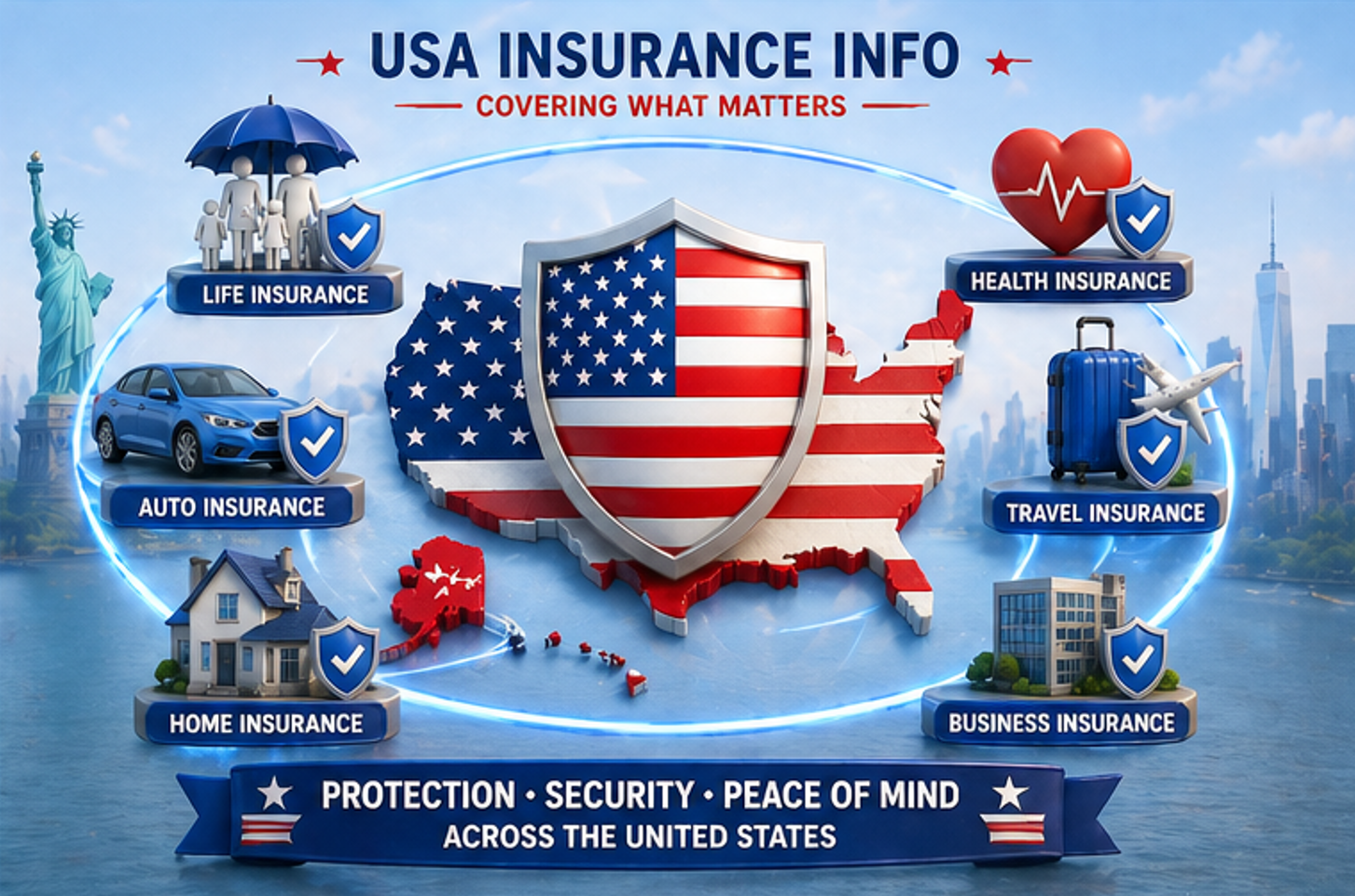
Insurance in the United States Complete Guide to Health Life Auto Home and Travel Coverage
Insurance in the United States is one of the most important parts of financial planning because most protection systems are privately driven and costs for healthcare property damage and liability can be extremely high.
Unlike many countries, the US does not have a fully universal public insurance system for most areas. Instead, individuals rely heavily on private insurance through employers or personal plans regulated at both federal and state levels.
Why Insurance is Critical in the United States
The United States has some of the highest medical and legal costs in the world. A single emergency or accident can create major financial pressure without proper insurance coverage.
Key benefits include
Protection from extremely high hospital bills
Coverage for accident related expenses and liability claims
Protection against property loss due to fire theft or disasters
Legal protection in case of lawsuits
Income protection in case of disability or death
Coverage for travel medical emergencies
How Insurance Works in the United States
Insurance in the US is mainly private with regulation shared between federal and state governments.
Main characteristics include
Employer sponsored insurance is very common
Individuals can also buy private insurance directly
Government programs exist for specific groups such as elderly or low income individuals
Premiums and coverage vary widely based on state and provider
Types of Insurance in the United States
Health Insurance
Health insurance is one of the most important and complex systems in the US.
It typically covers
Doctor visits
Hospital stays
Emergency care
Surgeries
Prescription drugs depending on plan
Preventive care
Main systems include
Employer provided insurance
Marketplace plans under Affordable Care Act
Government programs such as Medicare and Medicaid
Without insurance medical costs can be extremely high even for basic treatment.
Life Insurance
Life insurance in the United States is widely used for family financial protection and debt coverage.
Main types include
Term life insurance for fixed duration protection
Whole life insurance for lifelong coverage and cash value
Universal life insurance with flexible investment features
It is commonly used to cover
Mortgage payments
Family living expenses
Education costs for children
Outstanding debts
Auto Insurance
Auto insurance is legally required in almost every US state.
It usually includes
Liability coverage for damage to others
Collision coverage for your own vehicle
Comprehensive coverage for theft or non accident damage
Medical payments coverage
Uninsured or underinsured motorist coverage
Driving without insurance can lead to license suspension fines and legal liability.
Homeowners Insurance
Home insurance is essential in the United States especially due to risks like storms fires and theft.
It generally covers
Dwelling structure
Personal property inside the home
Liability protection if someone is injured on property
Additional living expenses if home becomes uninhabitable
Mortgage lenders almost always require homeowners insurance.
Travel Insurance
Travel insurance is optional but widely used especially for international trips.
It includes
Emergency medical coverage abroad
Trip cancellation protection
Lost baggage coverage
Flight delays and interruptions
Emergency evacuation services
Healthcare outside the US can be expensive so travelers often rely on insurance protection.
What Affects Insurance Costs in the United States
Insurance pricing varies significantly based on risk and location.
Main factors include
State laws and regulations
Age and health condition
Driving record for auto insurance
Credit score in many states
Property location and risk level
Coverage limits and deductibles
Claim history
Common Insurance Mistakes in the United States
One major mistake is choosing minimum auto coverage which may not be enough after serious accidents.
Another mistake is not understanding health insurance deductibles which can result in high out of pocket expenses.
Many homeowners also underestimate flood or earthquake risks since these are not always included in standard policies.
People also rely too heavily on employer health insurance without having backup coverage.
How Insurance Claims Work in the United States
General claim process includes
Reporting the incident immediately
Submitting claim through insurer app or website
Providing documentation and evidence
Inspection or review by adjuster
Approval or denial based on policy terms
Payment or repair settlement
Each state and insurer may have different timelines and procedures.
Ways to Save on Insurance in the United States
You can reduce insurance costs by
Bundling home and auto insurance
Maintaining good driving record
Increasing deductibles where affordable
Comparing multiple providers
Improving credit score
Using employer group insurance benefits
Avoiding unnecessary coverage overlap
Popular Insurance Topics in the United States
Best health insurance plans USA
Car insurance comparison by state
Homeowners insurance cost USA
Life insurance for families USA
Medicare and Medicaid explained
Cheap travel insurance USA
Important Reminder
Insurance in the United States is highly variable depending on state regulations provider networks and individual risk factors. Always review coverage limits deductibles exclusions and provider networks carefully before purchasing any policy.
Final Thoughts
Insurance in the United States is not optional in most areas of life if you want financial stability. With high healthcare costs strong liability laws and frequent natural disaster risks proper insurance coverage is essential for protecting income assets and family security.